 590-165_mfc1.jpg (157748 bytes)
|
The Railfaneurope.net Picture Gallery
Directory: /pix/new/08_aug30-es2
Last update: Mon 31 Aug 15:25:58 BST 2026
|
|
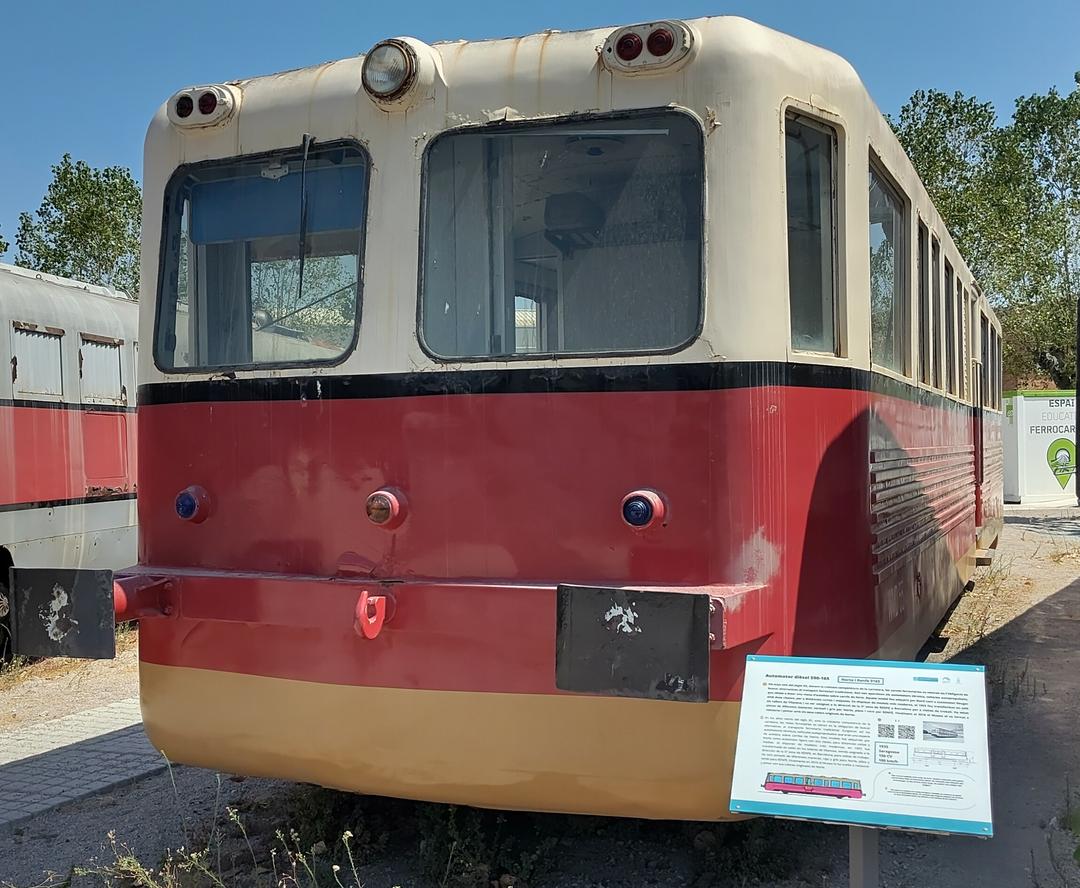
Diesel railbus 590-165, built 1935 by Zaragoza for Norte as No. 9165,
this unit remained in passenger service until 1955 when it was
rebuilt to a departmental unit. It is now shown in the original Norte
livery, Renfe used a silver and green paint. 150 HP, 100 km/h.
Museu del Ferrocarril de Catalunya, Vilanova i la Geltrú, 2026-08-18. |
|
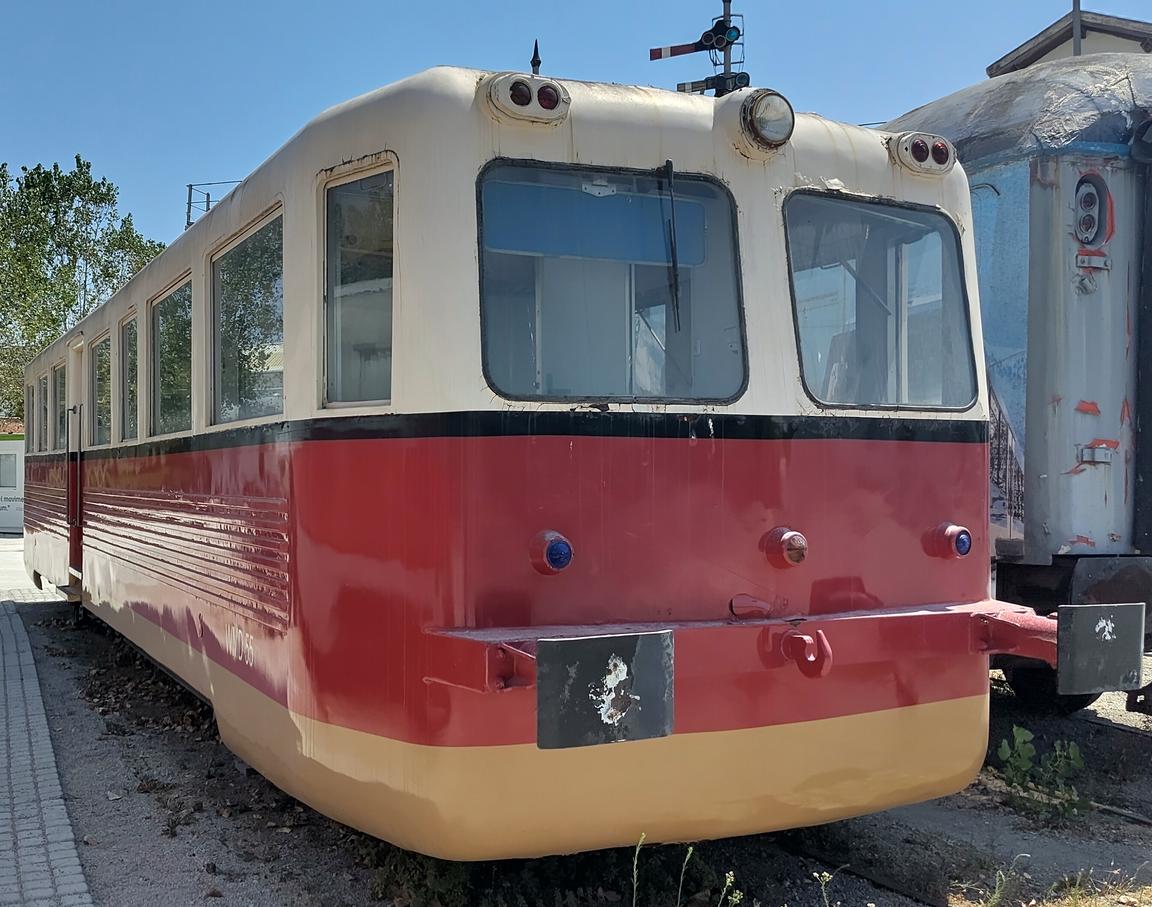
Diesel railbus 590-165, built 1935 by Zaragoza for Norte as No. 9165,
this unit remained in passenger service until 1955 when it was
rebuilt to a departmental unit. It is now shown in the original Norte
livery, Renfe used a silver and green paint. 150 HP, 100 km/h.
Museu del Ferrocarril de Catalunya, Vilanova i la Geltrú, 2026-08-18. |
|
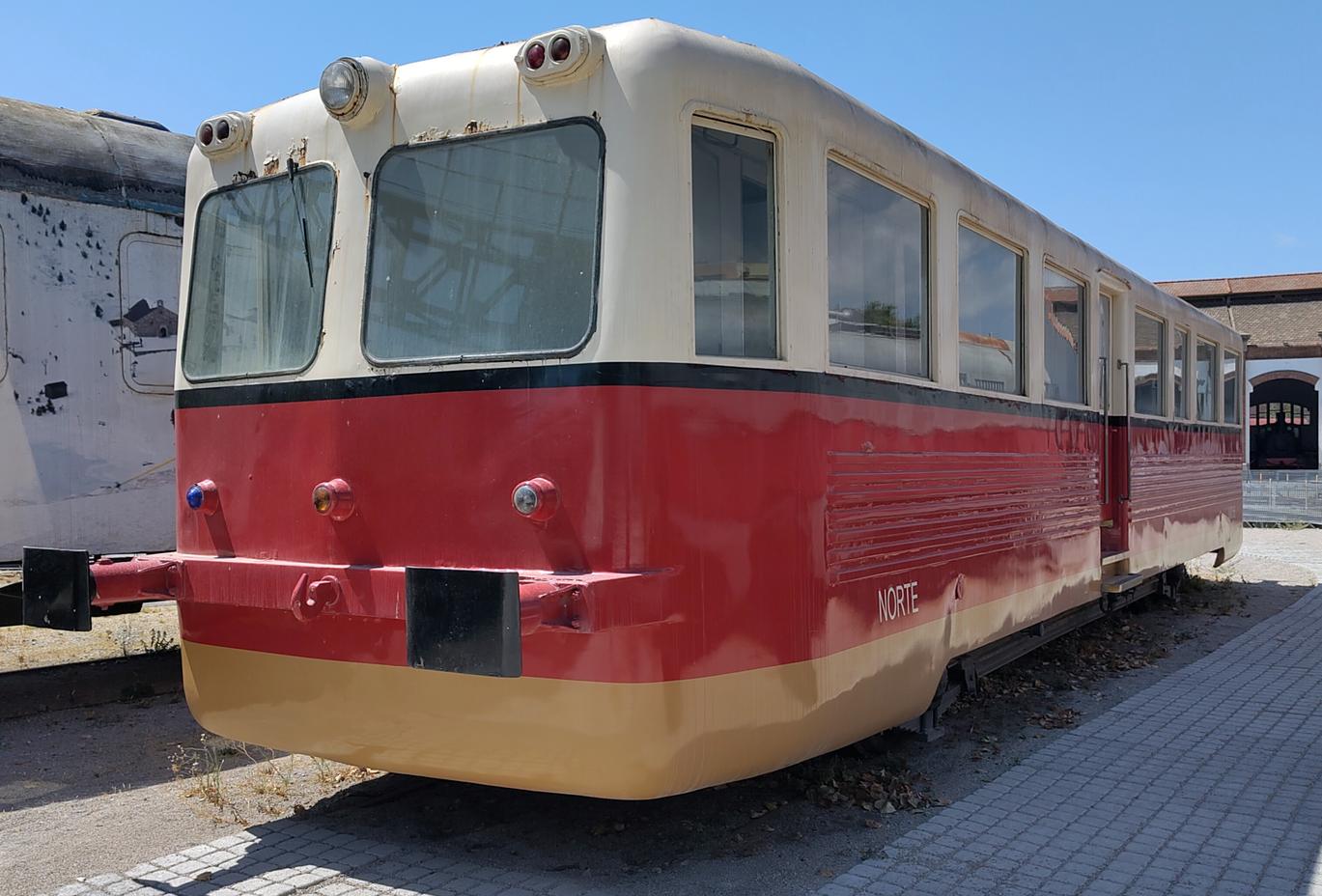
Diesel railbus 590-165, built 1935 by Zaragoza for Norte as No. 9165,
this unit remained in passenger service until 1955 when it was
rebuilt to a departmental unit. It is now shown in the original Norte
livery, Renfe used a silver and green paint. 150 HP, 100 km/h.
Museu del Ferrocarril de Catalunya, Vilanova i la Geltrú, 2026-08-18. |
|
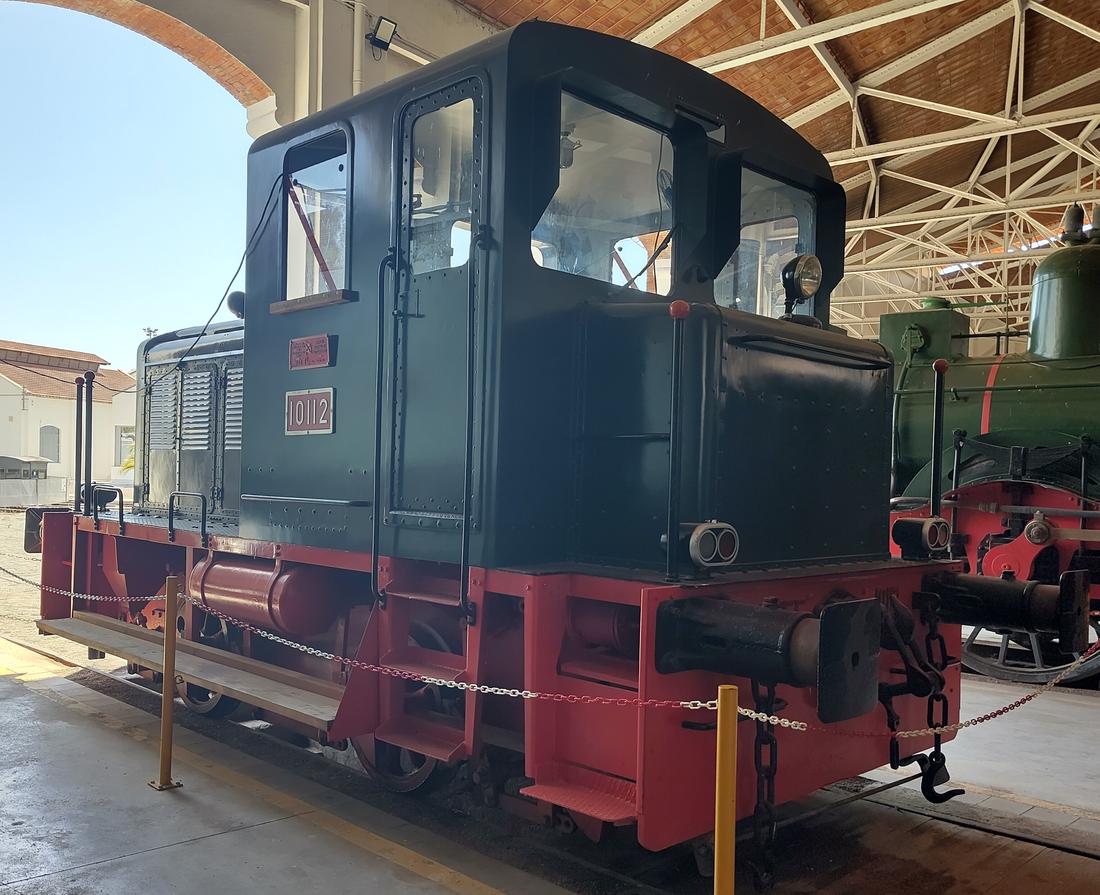
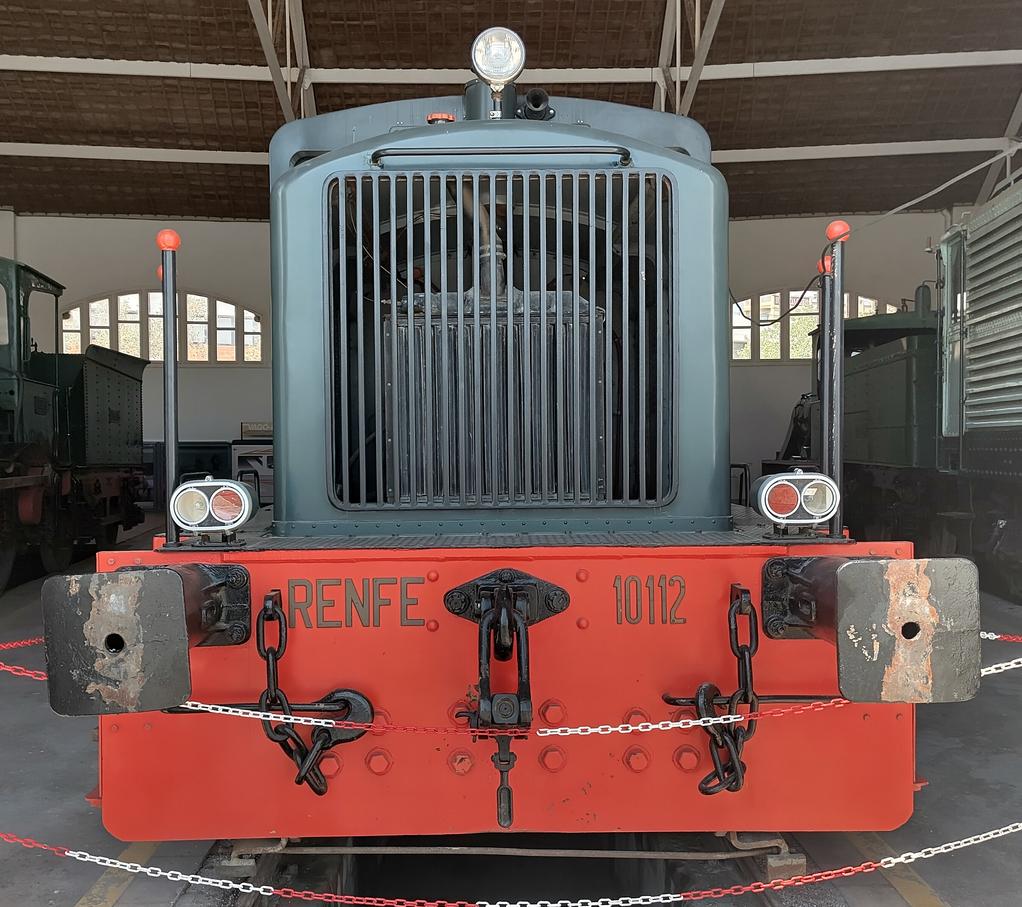
Renfe diesel shunter No. 10112, built 1963 as part of a series of
46 locomotives, part of the subseries by Euskalduna. Later
numbered 301-012-1. Still operational and used by the since museum to
move rolling stock around.
Museu del Ferrocarril de Catalunya, Vilanova i la Geltrú, 2026-08-18. |
|
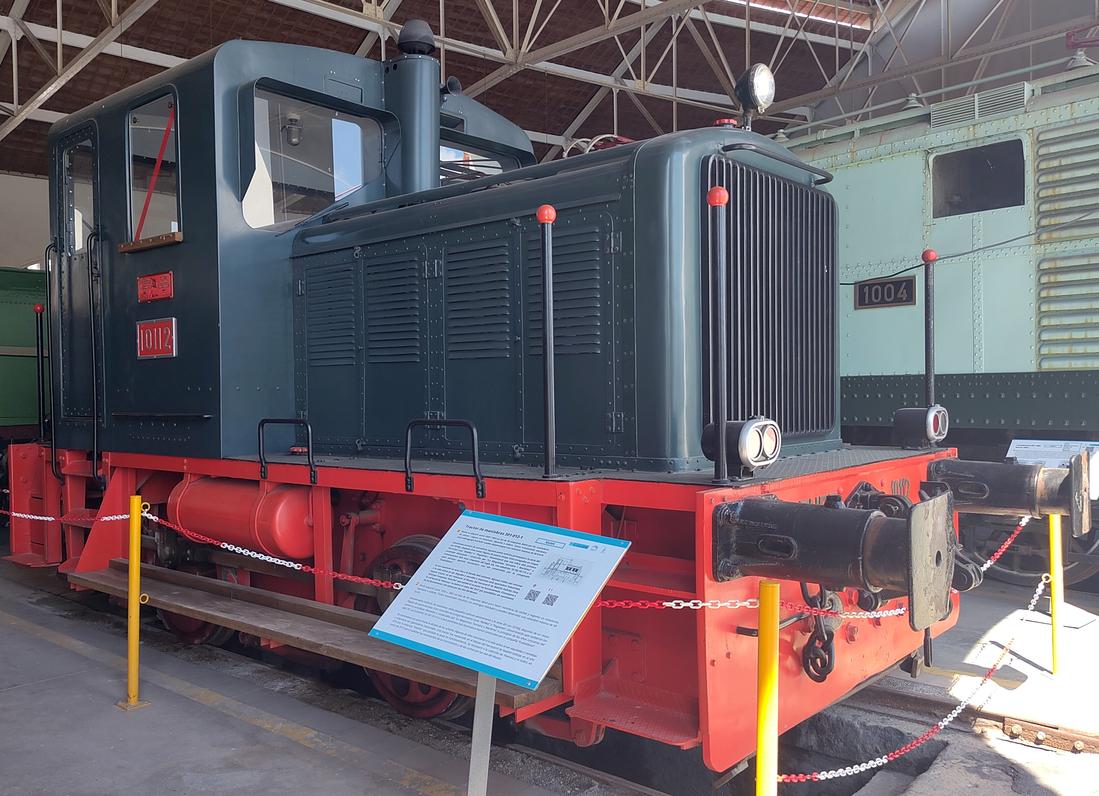
Renfe diesel shunter No. 10112, built 1963 as part of a series of
46 locomotives, part of the subseries by Euskalduna. Later
numbered 301-012-1. Still operational and used by the since museum to
move rolling stock around.
Museu del Ferrocarril de Catalunya, Vilanova i la Geltrú, 2026-08-18. |
|
Renfe diesel shunter No. 10112, built 1963 as part of a series of
46 locomotives, part of the subseries by Euskalduna. Later
numbered 301-012-1. Still operational and used by the since museum to
move rolling stock around.
Museu del Ferrocarril de Catalunya, Vilanova i la Geltrú, 2026-08-18. |
|
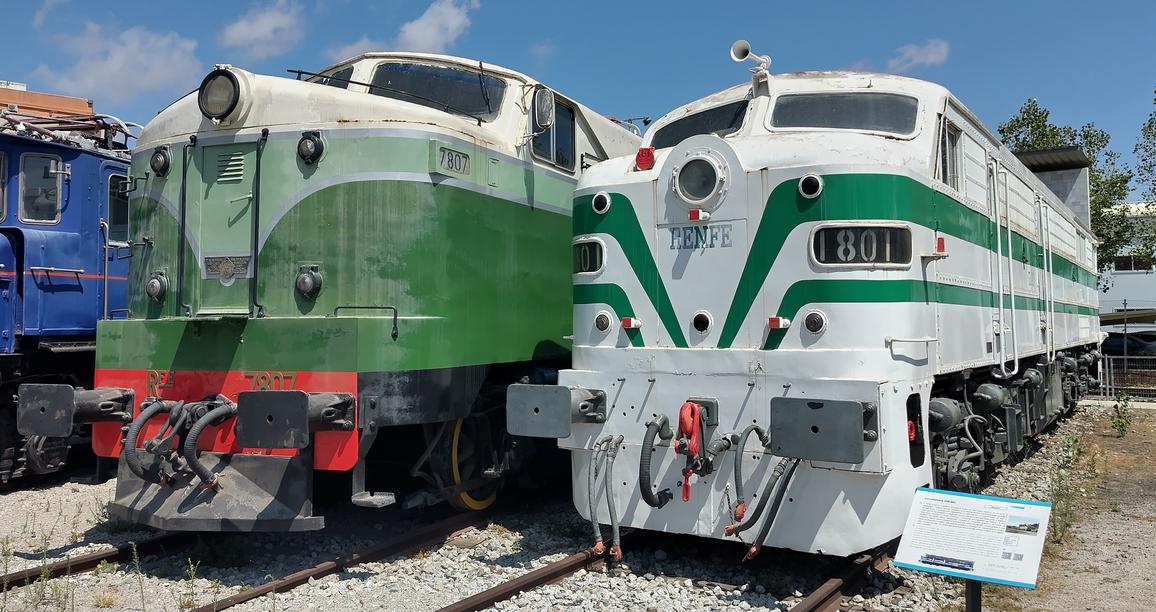
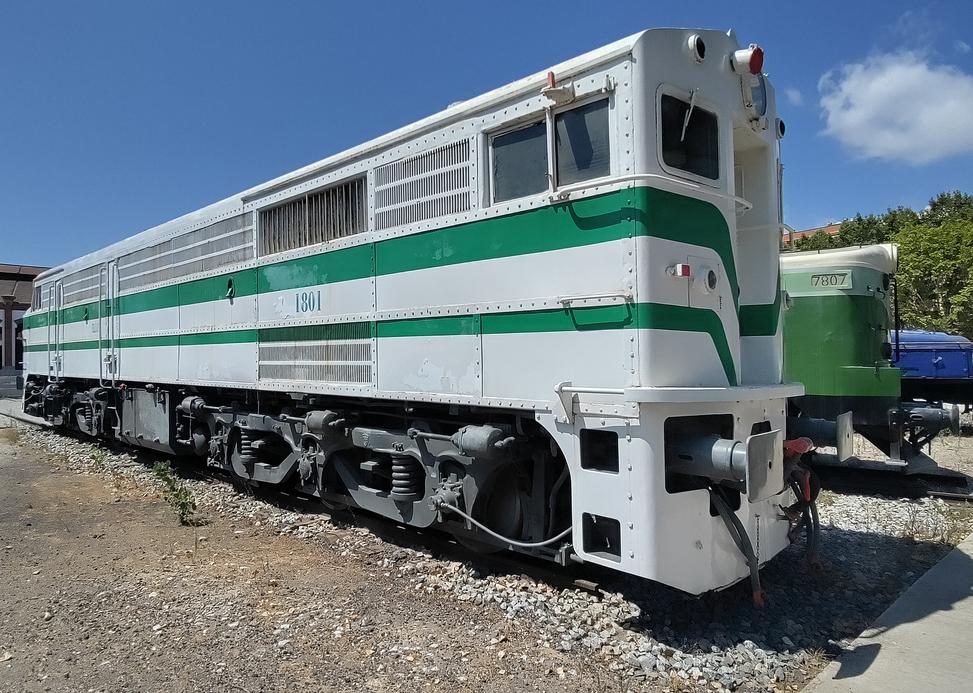
Renfe diesel-electric locomotive No. 1801 (later 318-001) of 1958 by Alco, next
to the electric 7807 (later 278-007) of 1954 by Westinghouse.
Two examples of American-designed post-war power in Spain. Even the lighted
number boxes are typically American.
Museu del Ferrocarril de Catalunya, Vilanova i la Geltrú, 2026-08-18. |
|
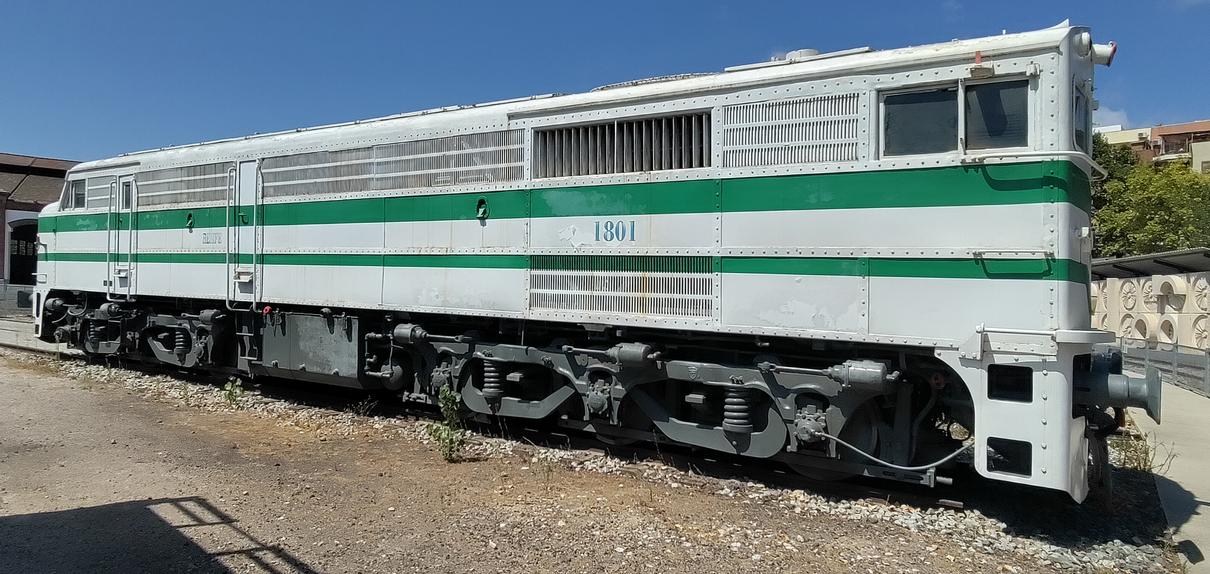
Renfe diesel-electric locomotive No. 1801 (later 318-001), built
1958 by Alco, 1457 kW, 120 km/h. Clearly derived from an American
single-cab design, Renfe required a second cab that was installed
on the flat end without a nose or side doors.
Museu del Ferrocarril de Catalunya, Vilanova i la Geltrú, 2026-08-18. |
|
Renfe diesel-electric locomotive No. 1801 (later 318-001), built
1958 by Alco, 1457 kW, 120 km/h. Clearly derived from an American
single-cab design, Renfe required a second cab that was installed
on the flat end without a nose or side doors.
Museu del Ferrocarril de Catalunya, Vilanova i la Geltrú, 2026-08-18. |
|
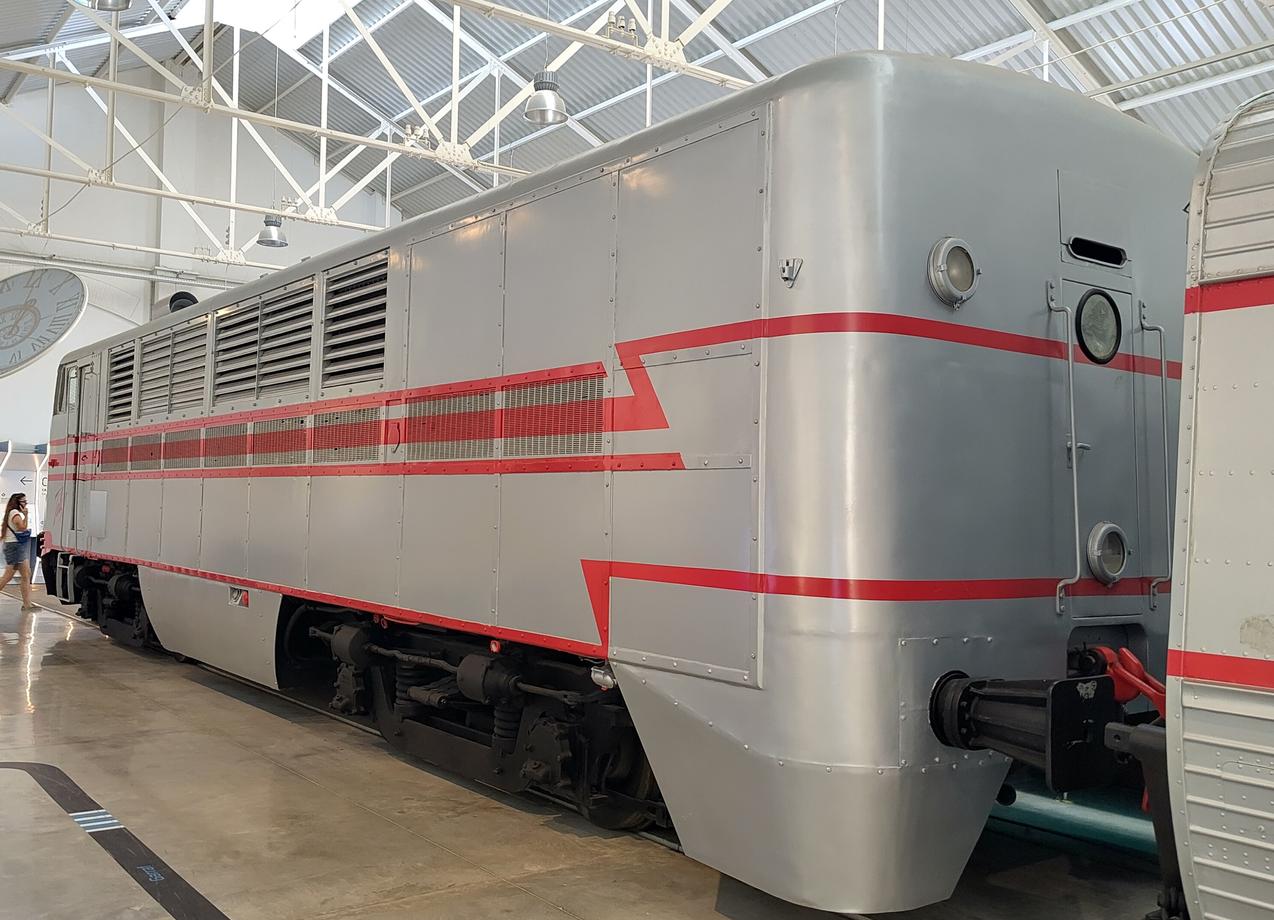
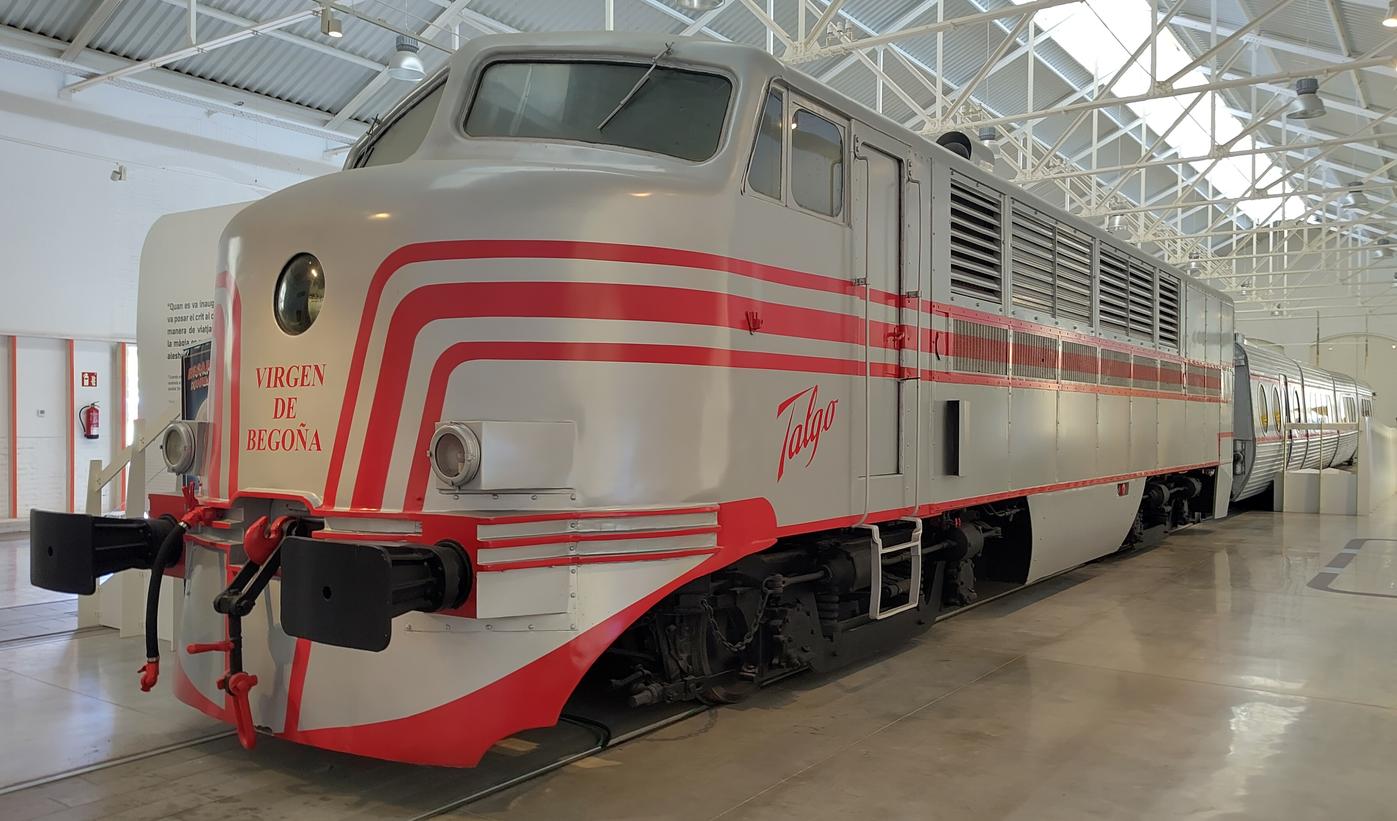
Diesel-electric locomotive Renfe 3T/353-003 "Virgen de Begoña",
built 1949 by American Car Foundry to work together with the Talgo II
units, of which the front end of the baggage car (without wheels) was
supported by the rear end of the locomotive. In 1958 the original
Hercules eight-cylinder engines were replaced by more reliable Maybach
six-cylinder engines. The Talgo II service ended in 1972, after which
three of the four locomotives were rebuilt with new rear ends, running
as a pair to pull a Talgo III between Miranda de Ebro and Bilbao until
1976. The preserved locomotive remains in the rebuilt state, recognizable
from the front by the buffers and additional headlights, but was
repainted in its livery of origin. The four-car Talgo II set in the same
museum cannot be coupled to the locomotive, unlike the one preserved in
Madrid.
Museu del Ferrocarril de Catalunya, Vilanova i la Geltrú, 2026-08-18. |
|
Diesel-electric locomotive Renfe 3T/353-003 "Virgen de Begoña",
built 1949 by American Car Foundry to work together with the Talgo II
units, of which the front end of the baggage car (without wheels) was
supported by the rear end of the locomotive. In 1958 the original
Hercules eight-cylinder engines were replaced by more reliable Maybach
six-cylinder engines. The Talgo II service ended in 1972, after which
three of the four locomotives were rebuilt with new rear ends, running
as a pair to pull a Talgo III between Miranda de Ebro and Bilbao until
1976. The preserved locomotive remains in the rebuilt state, recognizable
from the front by the buffers and additional headlights, but was
repainted in its livery of origin.
Museu del Ferrocarril de Catalunya, Vilanova i la Geltrú, 2026-08-18. |
|
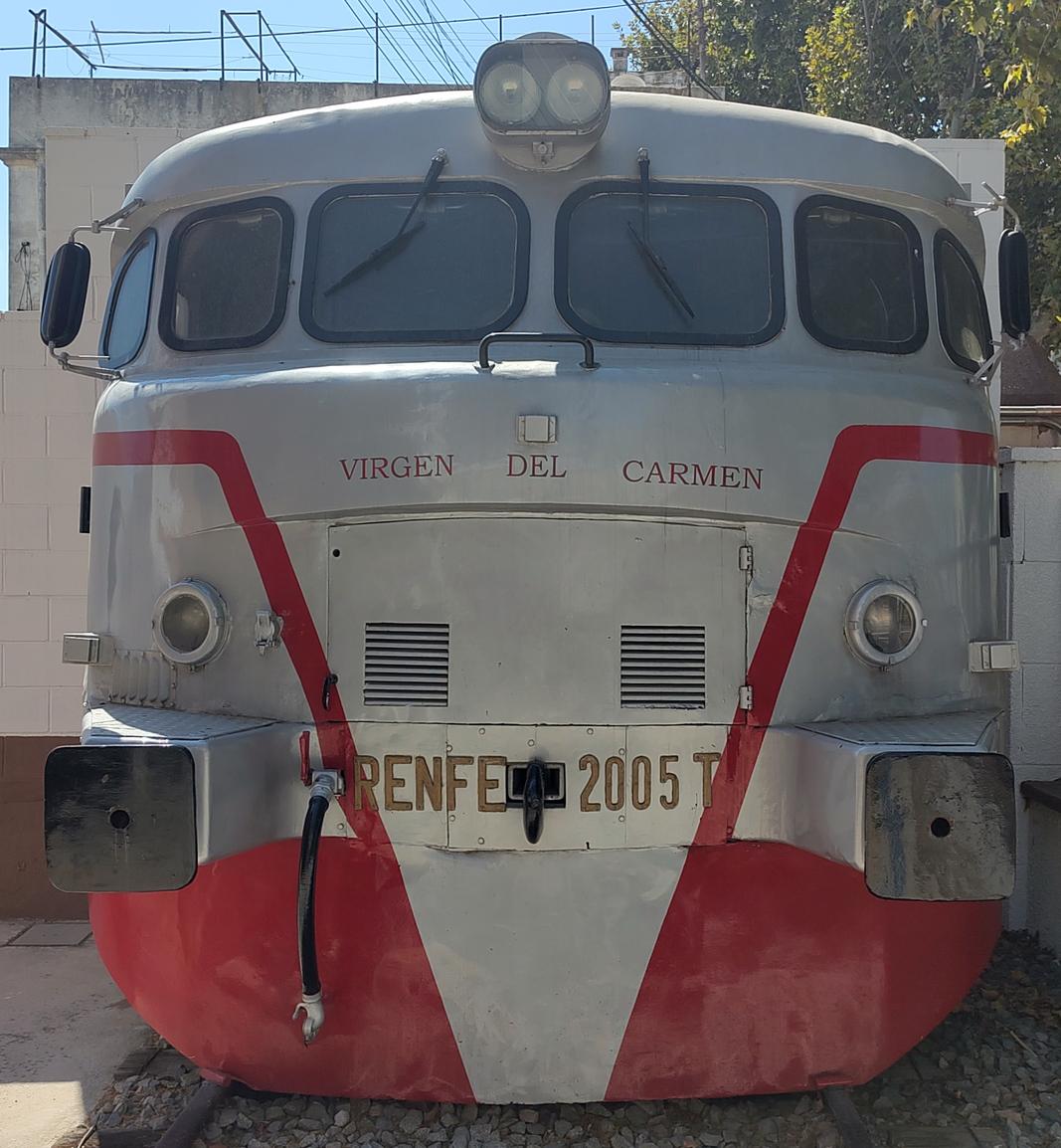
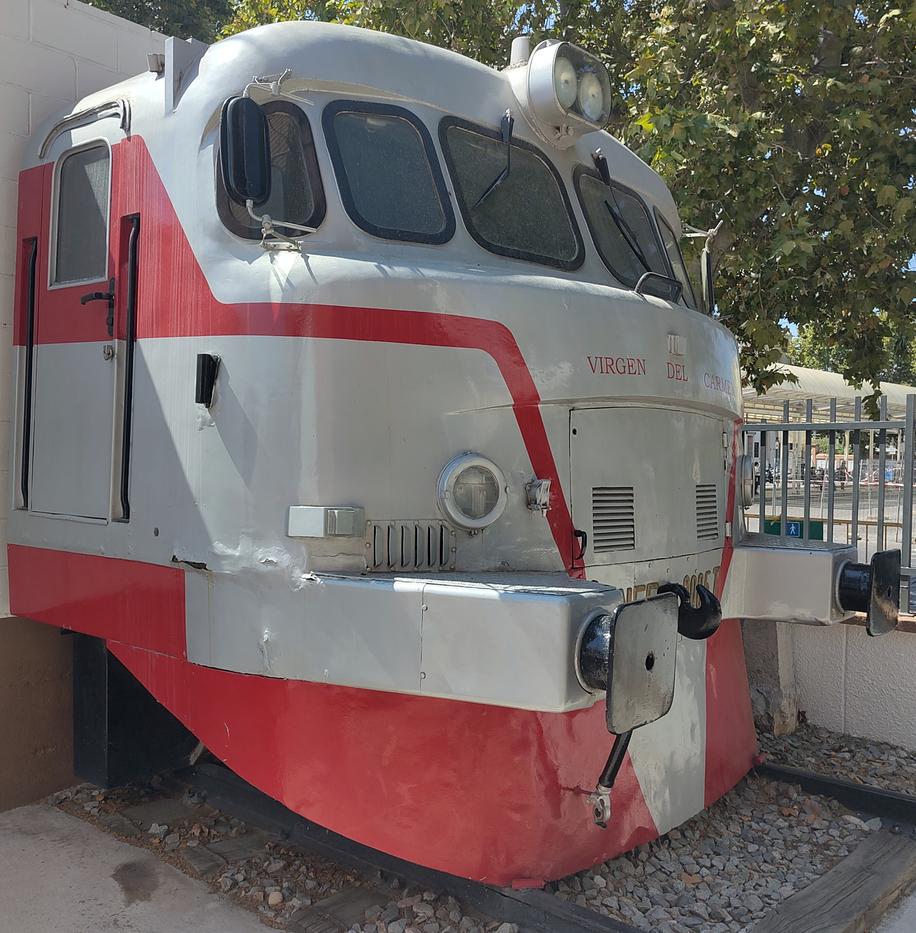
Cab fragment of Renfe diesel-electric locomotive 2005 T "Virgen del
Carmen" (later 352-005) of 1964 by Krauss-Maffei. This single-ended
series was designed to run with Talgo III units, to which they were
coupled with Scharfenberg couplers and provided electric energy.
Technically they were related to DB class V200.0, but in a different
low-profile body. In 1986 the locomotives were rebuilt, adding
air-conditioning units and replacing the wrap-around front windows
by six smaller, less elegant but more robust windows. The 352-005-3
went out or service 1998, the last three locomotives were withdrawn
in 2002.
Museu del Ferrocarril de Catalunya, Vilanova i la Geltr&ucute;, 2026-08-18. |
|
Cab fragment of Renfe diesel-electric locomotive 2005 T "Virgen del
Carmen" (later 352-005) of 1964 by Krauss-Maffei. This single-ended
series was designed to run with Talgo III units, to which they were
coupled with Scharfenberg couplers and provided electric energy.
Technically they were related to DB class V200.0, but in a different
low-profile body. In 1986 the locomotives were rebuilt, adding
air-conditioning units and replacing the wrap-around front windows
by six smaller, less elegant but more robust windows. The 352-005-3
went out or service 1998, the last three locomotives were withdrawn
in 2002.
Museu del Ferrocarril de Catalunya, Vilanova i la Geltr&ucute;, 2026-08-18. |
|
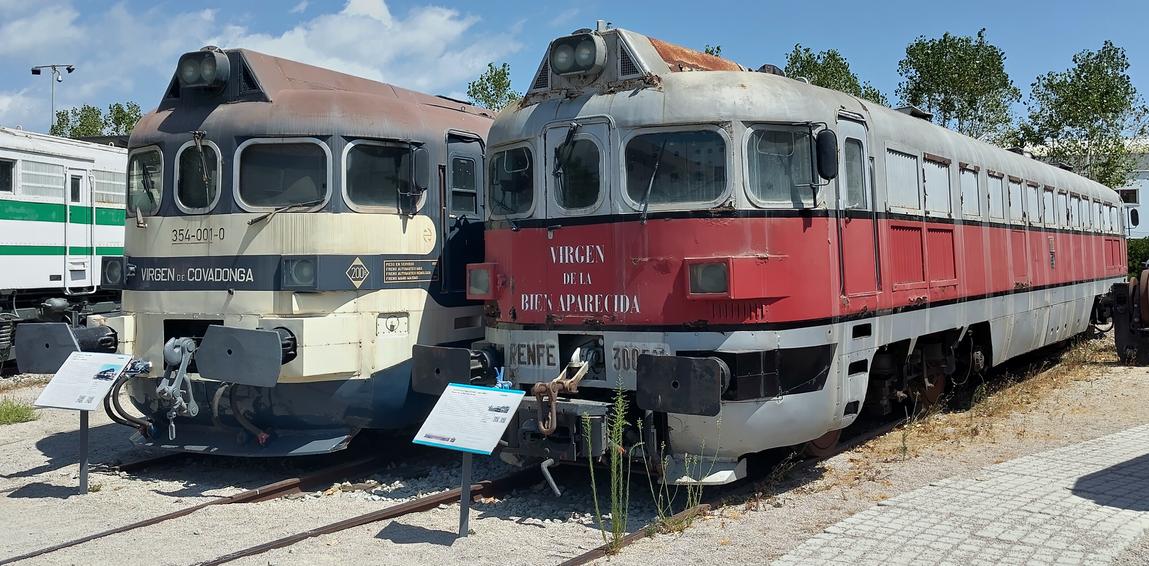
On the right, Diesel-hydraulic locomotive Renfe 3005 T (later 353-005-3)
"Virgen de la Bien Aparecida" on the right (Krauss-Maffei 1969, in service
until 2003, 6041510 km travelled). Technically derived from class 352
(2000 T) the five locomotives of this class were more powerful (2200 kW)
with a new body design. They could reach 180 km/h (on a test run in 1978
one reached 230 km/h). Until 1972, the 3002 T and 3005 T were used in
France on standard-gauge bogies for the Catalan-Talgo. They were later used on two different routes between Mardid and Barcelona. On the left, the 354-001-0 "Virgen de Covadonga", a more modern and more lightweight version (80 t instead of 88 t), reaching 200 km/h with a power of 2250 kW, built 1983, in service until 2008. Museu del Ferrocarril de Catalunya, Vilanova i la Geltrú, 2026-08-18. |
|
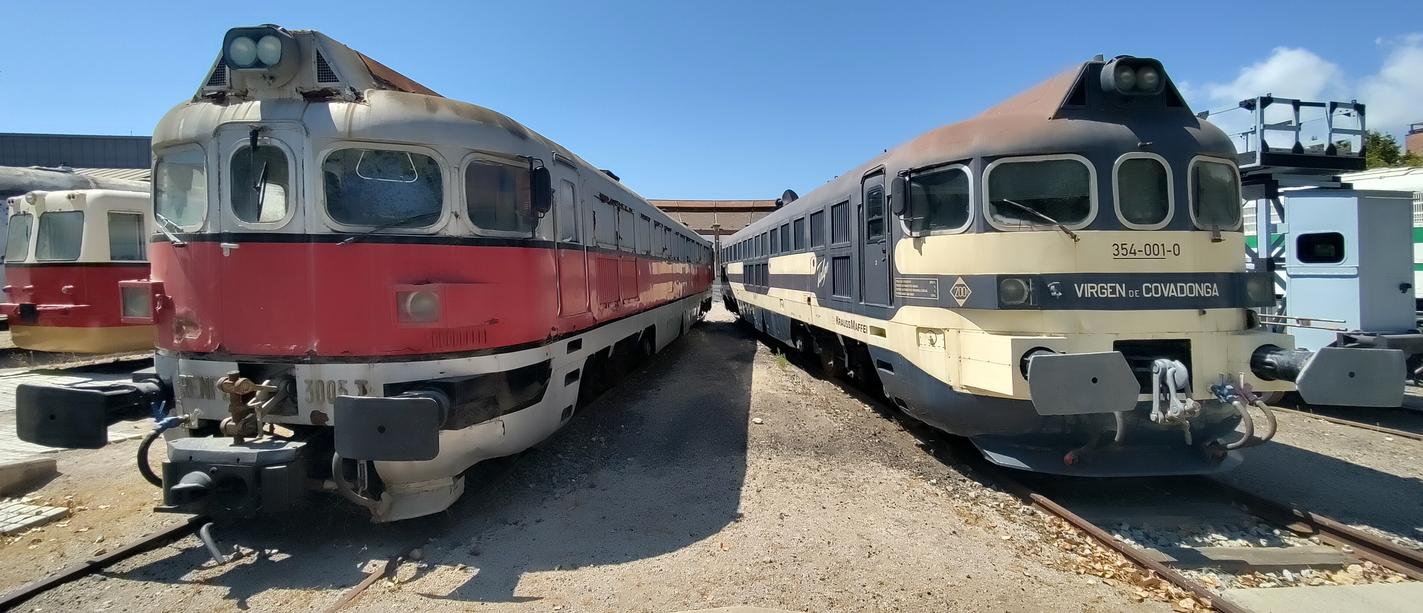
On the left, Diesel-hydraulic locomotive Renfe 3005 T (later 353-005-3)
"Virgen de la Bien Aparecida" on the right (Krauss-Maffei 1969, in service
until 2003, 6041510 km travelled).
On the right, the 354-001-0 "Virgen de Covadonga", built 1983, in service
until 2008.
Museu del Ferrocarril de Catalunya, Vilanova i la Geltrú, 2026-08-18. |
|
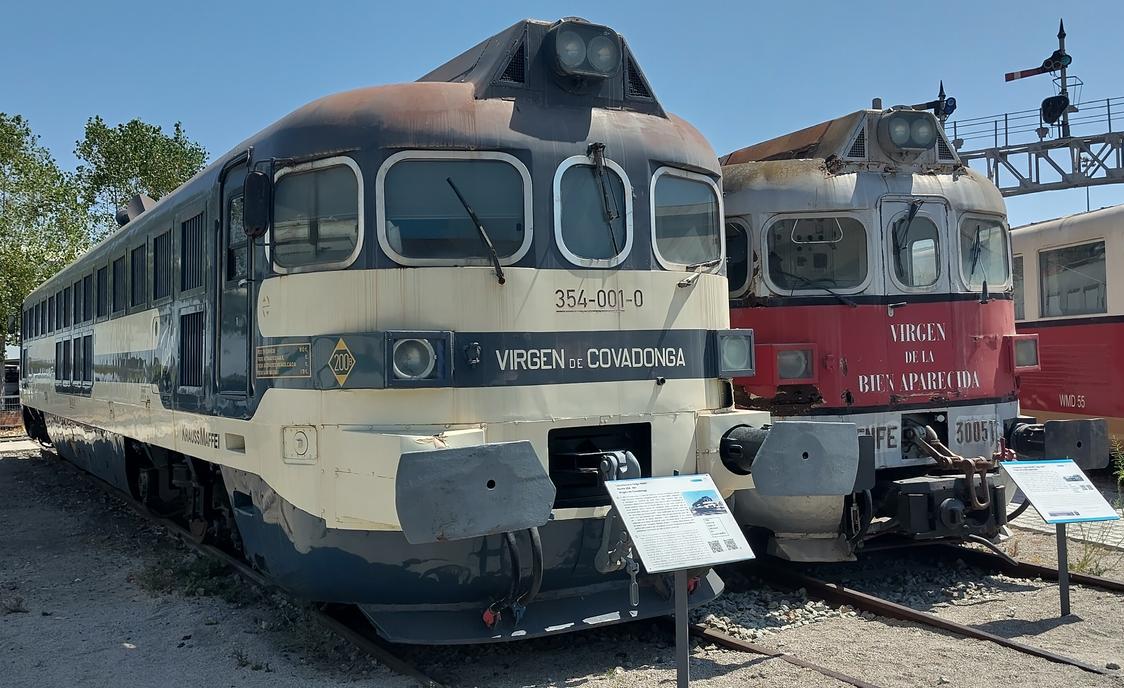
Diesel-hydraulic locomotive Renfe 354-001-0 "Virgen de Covadonga",
built 1983 to haul Talgo Pendular trains, more lightweight than the
previous class 353 so that it can go faster in curves at up to 180 km/h
regular speed. Electrification rendered them useless in the 2000s.
Museu del Ferrocarril de Catalunya, Vilanova i la Geltrú, 2026-08-18. |
|
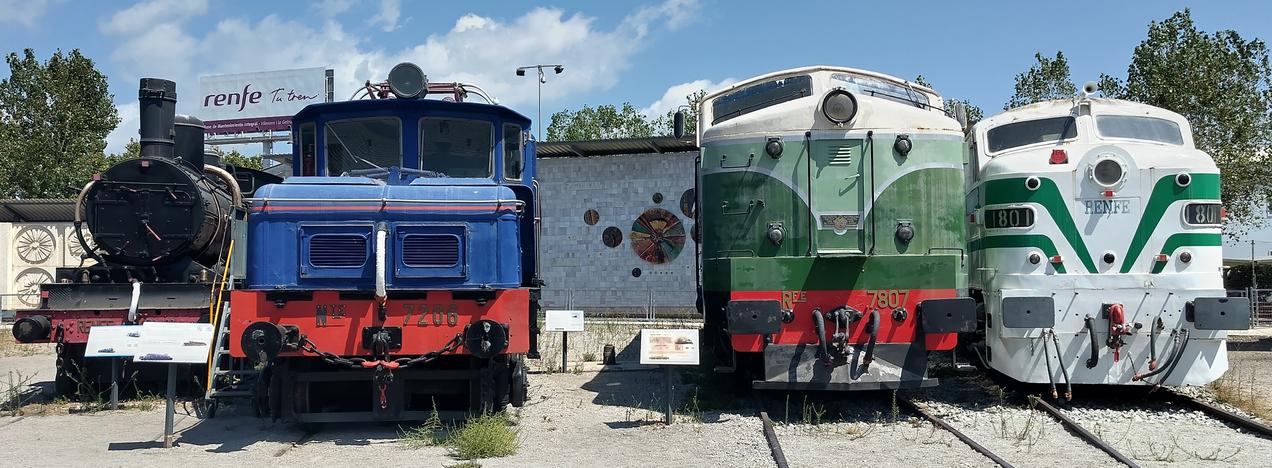
Steam locomotive Renfe 231-4001, electric locomotives Norte 7206 and
Renfe 7807, diesel locomotive Renfe 1801.
Museu del Ferrocarril de Catalunya, Vilanova i la Geltrú, 2026-08-18. |
|
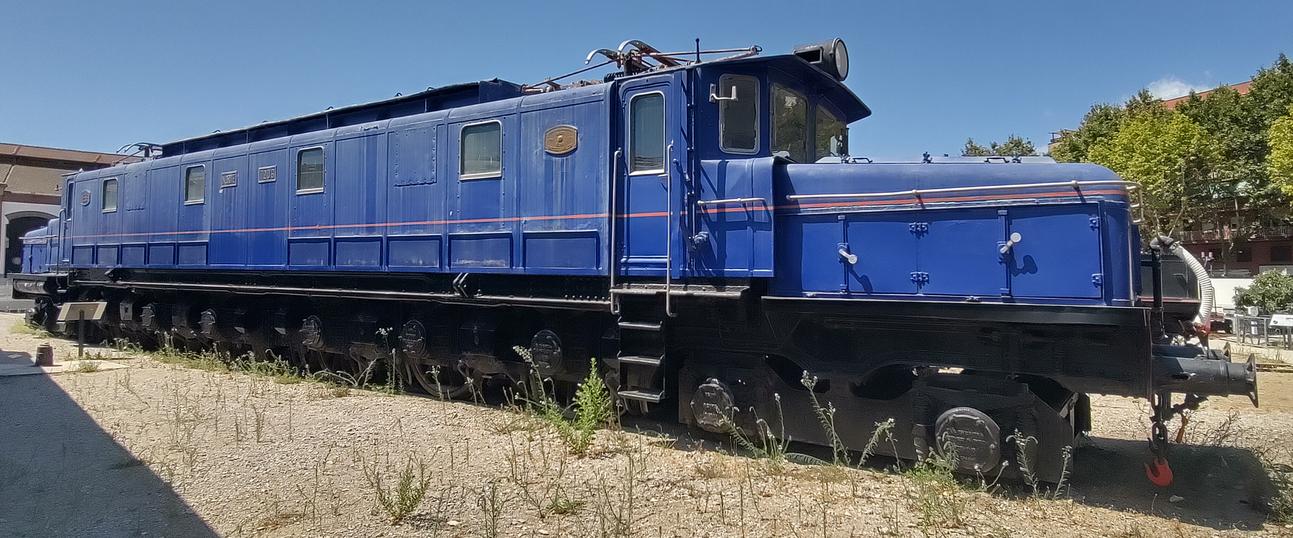
Electric locomotive Norte 2706, later Renfe 272-006, "Cocodril"
built 1928 by Babcock & Wilcox / BBC for express trains on
mainlines electrified with 1500 V DC as one of a series of 12
units. In service until 1976. 2383 kW, 110 km/h.
Museu del Ferrocarril de Catalunya, Vilanova i la Geltrú, 2026-08-18. |
|
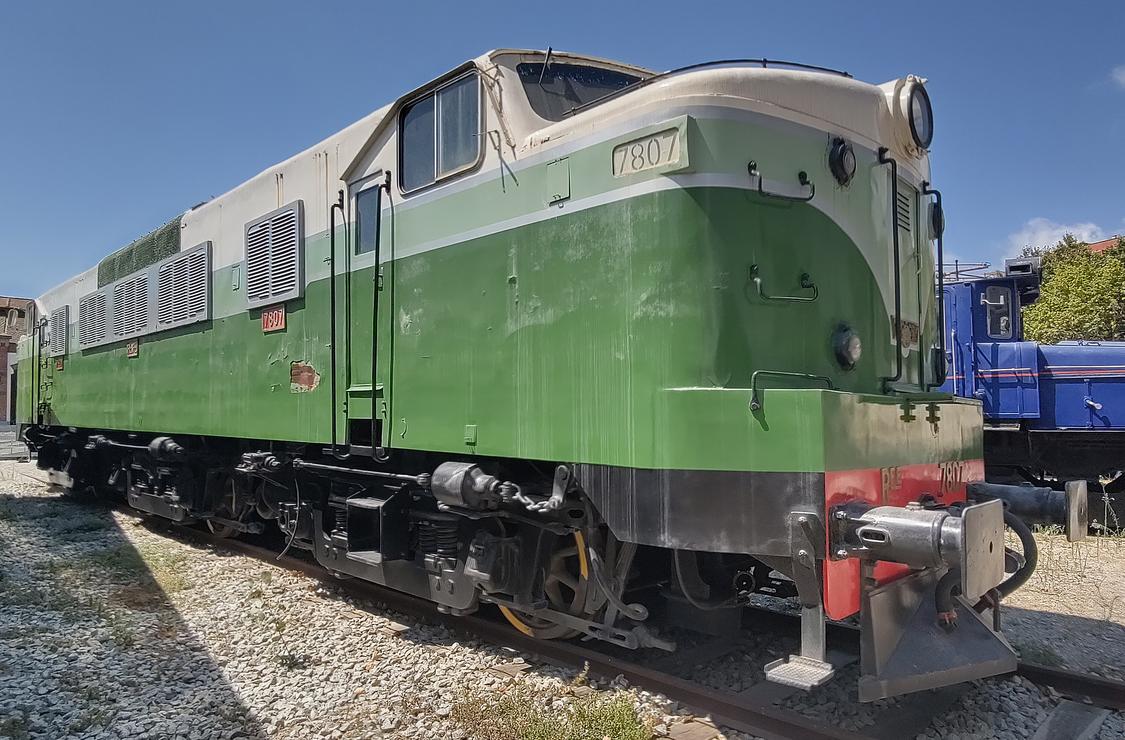
Renfe electric locomotive (3000 V DC) 7807 (later 278-007) of 1954 by
Westinghouse. Part of a series of 29 locomotives built until 1960 with
three bogies, power 2200 kW, speed 110 km/h, in service until 1992
primarily with freight trains.
Museu del Ferrocarril de Catalunya, Vilanova i la Geltrú, 2026-08-18. |
|
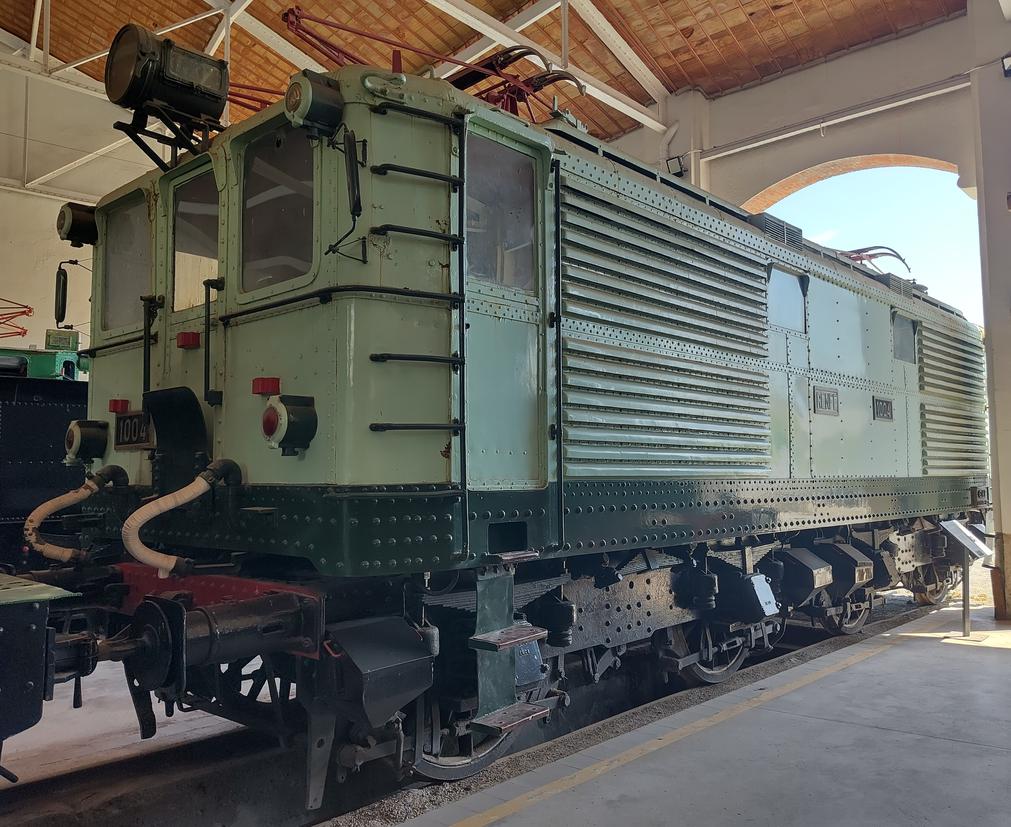
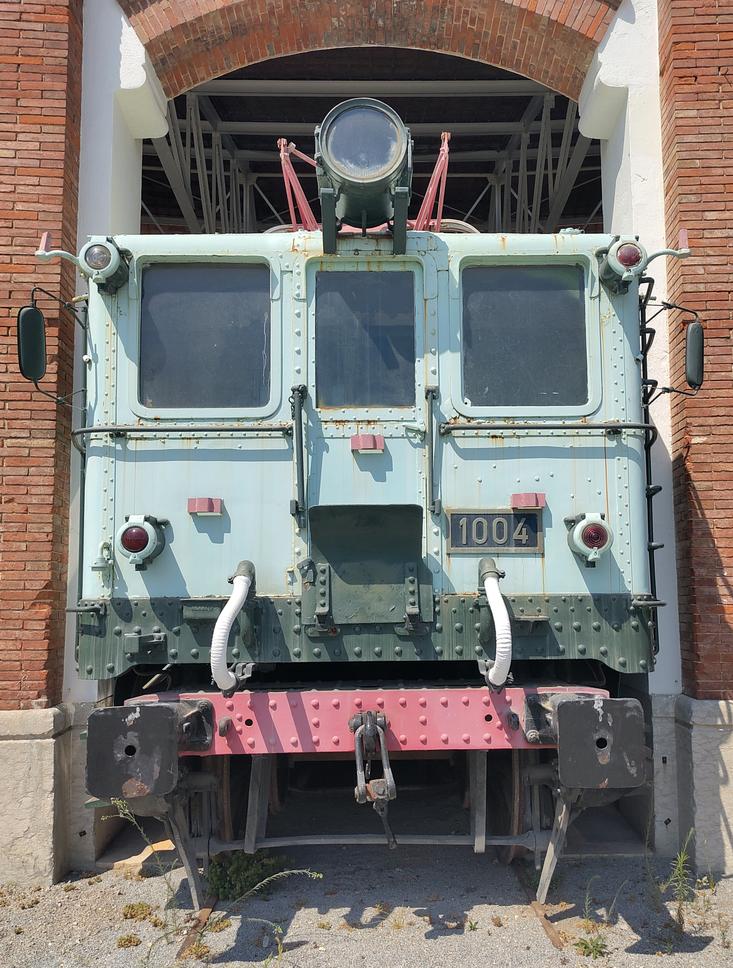
Electric locomotive Norte 1004 (later 281-004), built 1929. Derived from
the French BB 4000, equipped with rheostatic brakes, built for the
line Ripoll to Puigcerdá. In service until 1987.
Museu del Ferrocarril de Catalunya, Vilanova i la Geltrú, 2026-08-18. |
|
Electric locomotive Norte 1004 (later 281-004), built 1929. Derived from
the French BB 4000, equipped with rheostatic brakes, built for the
line Ripoll to Puigcerdá. In service until 1987.
Museu del Ferrocarril de Catalunya, Vilanova i la Geltrú, 2026-08-18. |
|
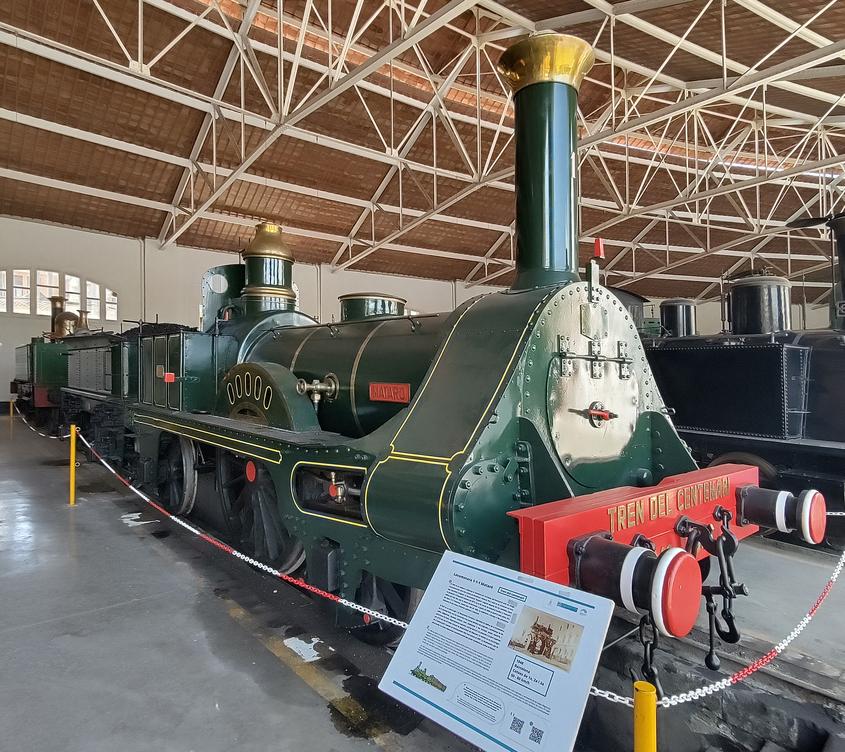
Steam locomotive 1-1-1 Mataró, originally built 1848 for the
line from Barcelona to Mataró, last mention 1898. In 1948 a
working replica was built by MTM, together with three coaches, forming
the "Tren del centenari". It was later restored and is still functional.
Museu del Ferrocarril de Catalunya, Vilanova i la Geltrú, 2026-08-18. |

 590-165_mfc2.jpg (158105 bytes)
 590-165_mfc3.jpg (162427 bytes)
 10112_mfc1.jpg (157505 bytes)
 10112_mfc2.jpg (162386 bytes)
 10112_mfc3.jpg (157287 bytes)
 1801+7807_mfc1.jpg (161162 bytes)
 1801_mfc1.jpg (161032 bytes)
 1801_mfc2.jpg (154720 bytes)
 350-003_mfc1.jpg (163378 bytes)
 350-003_mfc2.jpg (162534 bytes)
 2005T_mfc1.jpg (162460 bytes)
 2005T_mfc2.jpg (158704 bytes)
 3005T+354-001-0_mfc1.jpg (162589 bytes)
 3005T+354-001-0_mfc2.jpg (159874 bytes)
 354-001-0+3005T_mfc1.jpg (156536 bytes)
 231-4001+7206+7807+1801_mfc1.jpg (157519 bytes)
 Norte7206_mfc1.jpg (162156 bytes)
 7807_mfc1.jpg (161415 bytes)
 Norte1004_mfc1.jpg (160492 bytes)
 Norte1004_mfc2.jpg (158734 bytes)
 Mataro_mfc1.jpg (156688 bytes)